The Equal Rights Amendment Can Strengthen the Menopausal Workers' Fairness Act
August 06, 2026

Free speech is a cornerstone of democratic societies, a fundamental right that allows individuals to express their ideas, opinions, and beliefs without fear of censorship or reprisal. In the wake of the banning of books to silence voices in the LGBTQIA+ antiracists movement, it’s important to remember that it undermines intellectual freedom, stifles creativity, and restricts access to knowledge.
When a small group of people are given the power to decide what is suitable for public consumption, it becomes easy to extend this authority to other forms of media, art, and expression. This erosion of free speech poses a significant risk to democratic societies.
“When a select few control public content, it risks extending to other forms of expression, endangering free speech in democratic societies.”
The most significant infringement of free speech that book bans cause is the restriction of knowledge and the stifling of important discussions. When books are banned, readers are denied the opportunity to engage with different perspectives, question prevailing beliefs, and challenge their own preconceptions. This not only limits intellectual growth but also curtails the societal progress that is fostered by open dialogue.
At the heart of democratic societies is the principle that the exchange of ideas should be open and uninhibited. Banning books directly contradicts this principle, as it shields certain ideas and perspectives from public scrutiny. In the context of the LGBTQIA+ and antiracist movements, this type of censorship aims to suppress voices that advocate for equality and social justice. This not only hinders progress in our society but also perpetuates discrimination and prejudice. By silencing these voices, we risk perpetuating outdated and harmful beliefs, undermining the very essence of democratic societies.
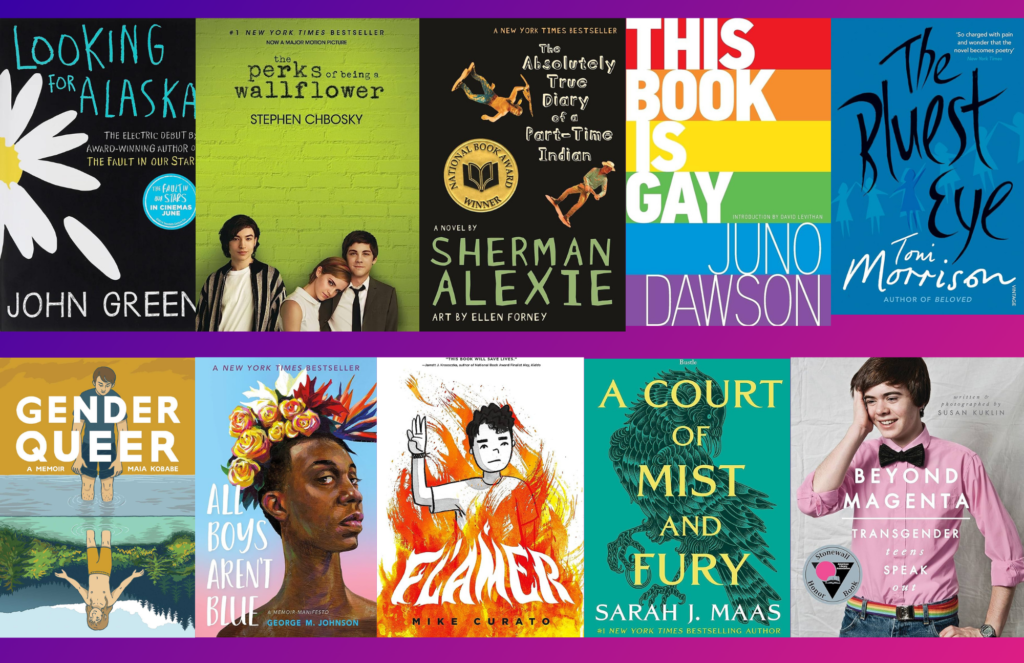
Banning books also stifles creativity. Literature is a powerful medium for self-expression, and authors often use it to explore complex and controversial issues. When certain topics become off-limits, writers may shy away from addressing them, fearing censorship or backlash. This self-censorship is detrimental not only to the authors but also to the readers who are deprived of thought-provoking and challenging works. Creativity flourishes when it can roam freely, unrestrained by the fear of censorship.
Banning books sets a dangerous precedent. Once society accepts the suppression of certain voices, it becomes easier to extend this authority to other forms of media, art, and expression. What begins with book bans may evolve into the censorship of movies, music, or online content. The erosion of free speech creeps into every aspect of society, threatening the very foundations of democracy.
Banning books in an attempt to silence voices in the LGBTQIA+ and antiracist movements is a direct attack on free speech, intellectual freedom, creativity, and knowledge access. It hinders the healthy exchange of ideas and stifles the progress of democratic societies. It is imperative to continue to push against book bans and protect free speech as a fundamental right and to encourage open dialogue, regardless of how uncomfortable or controversial the subjects may be. Only through the free and open exchange of ideas can societies truly grow, adapt, and thrive.